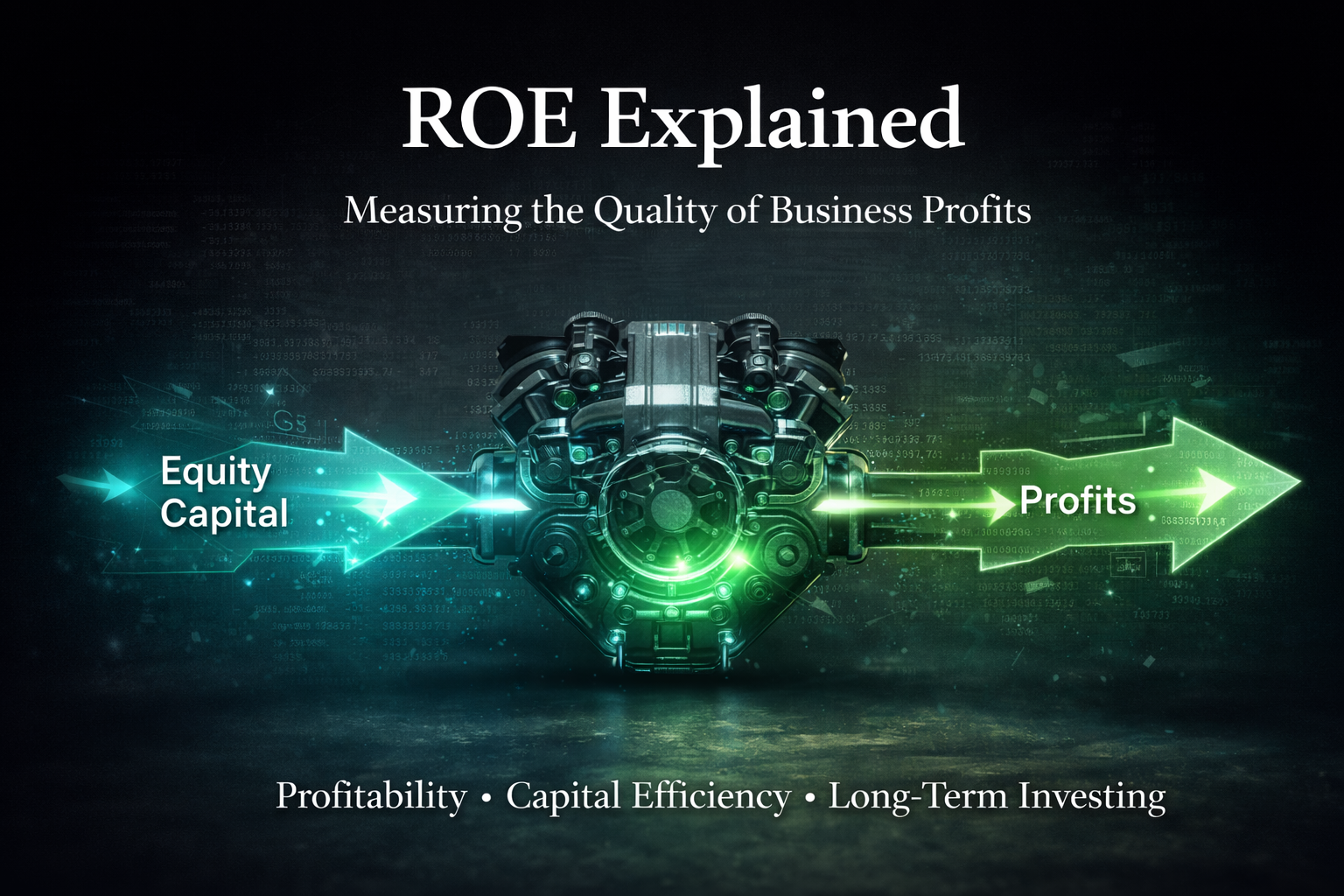
ROE Explained: How Return on Equity Helps Find Quality Stocks
ROE (Return on Equity) Explained – How to Identify High-Quality Companies
This content is for educational purposes only and does not constitute investment advice. Please consult a SEBI-registered Research Analyst before making any investment decisions.
📌 Table of Contents
➜ What is ROE?
Return on Equity (ROE) measures how efficiently a company generates profit using shareholders’ equity. It shows how well management is using investors’ capital.
➜ ROE Formula
ROE = Net Profit / Shareholders’ Equity
➜ Why ROE is Important
- Shows quality of business earnings
- Measures management efficiency
- Helps compare companies within the same sector
- Preferred by long-term investors
➜ How to Interpret ROE
- ROE > 20% → Excellent business
- ROE 15–20% → Good quality
- ROE 10–15% → Average
- ROE < 10% → Weak efficiency
➜ ROE vs EPS
EPS shows profit per share, while ROE shows how efficiently that profit is generated. High EPS with low ROE may indicate capital inefficiency.
➜ High ROE & Debt Trap
Very high ROE can sometimes be due to excessive debt. Always check Debt-to-Equity along with ROE to avoid value traps.
➜ Limitations of ROE
- Can be inflated by high leverage
- Not suitable alone for capital-intensive sectors
- Accounting policies can impact equity
➜ How Smart Investors Use ROE
- Prefer companies with consistent ROE > 15%
- Combine ROE with ROCE & EPS growth
- Avoid one-time ROE spikes
➜ Final Conclusion
ROE is one of the most powerful quality filters in stock investing. Used correctly, it helps identify durable, wealth-creating businesses.
Money Bells is a SEBI Registered Research Analyst. Content is educational only.
.jpg)